
Why Nightclub & Bar Insurance Is Different
Running a bar or nightclub in Miami is not the same as running a restaurant or retail store — and insurers treat it accordingly.
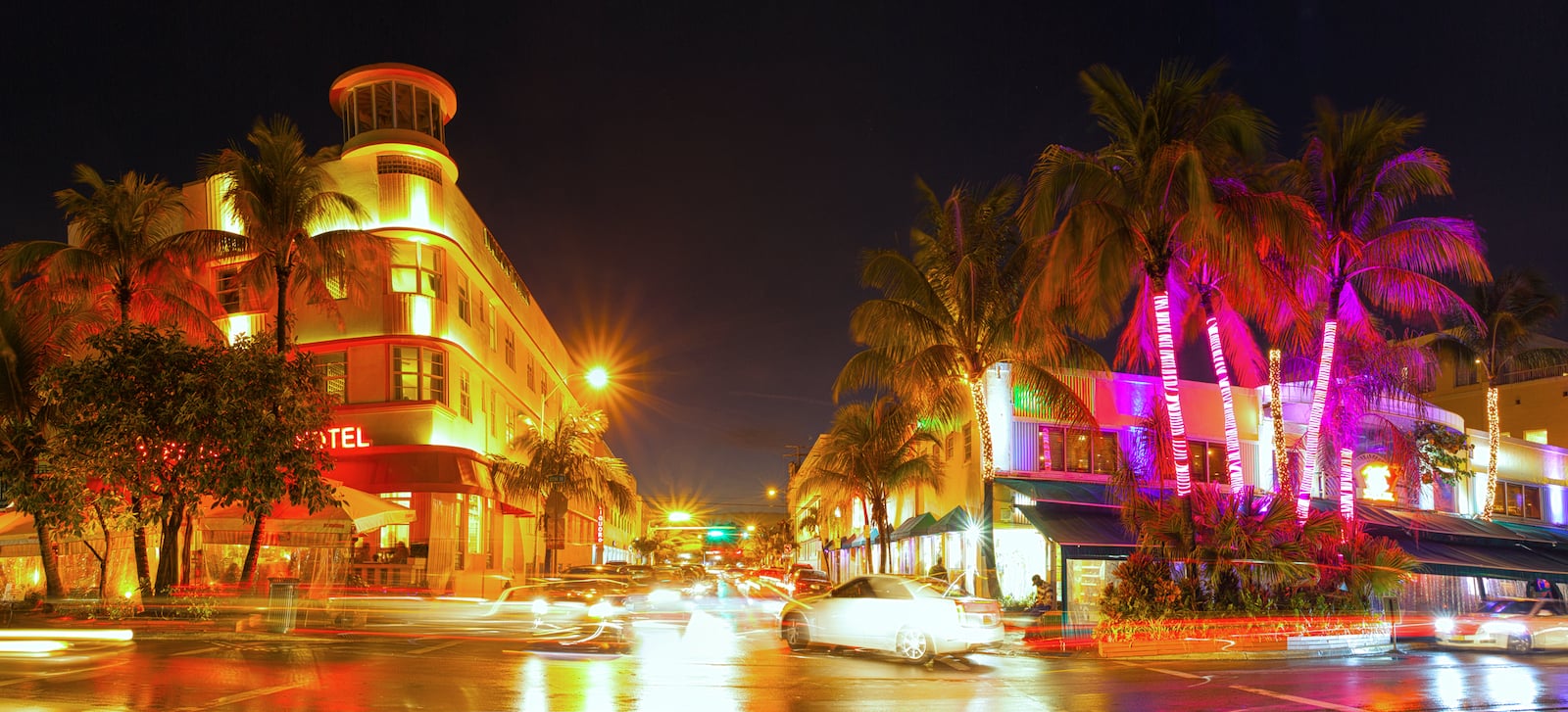
Miami’s hospitality scene operates 24 hours a day, attracts millions of tourists annually, and generates a higher concentration of alcohol-related incidents than most other markets in the country. Venues along Brickell, Wynwood, South Beach, and the Design District often operate past 5 AM under Miami-Dade Special Use permits. High-volume weekend covers, bottle service, celebrity DJ events, and poolside day parties all compound both the frequency and severity of potential claims
The risk factors that make this category uniquely difficult to insure:
The combination of late hours, high alcohol revenue as a percentage of total sales, dense crowds, and South Florida’s vulnerability to hurricane-season property damage creates a risk profile that many standard insurance carriers won’t touch without the right broker and the right documentation. Add Florida’s dram shop statute — Florida Statute § 768.125 — and a growing body of assault and battery litigation, and you have one of the most liability-intensive operations in commercial insurance.
If you treat this like a standard BOP (Business Owner’s Policy) purchase, you will either be underinsured, declined at renewal, or hit with a large uncovered claim. This guide explains how to approach it correctly.
Essential Coverages Explained
2.1 General Liability Insurance
What it is: General liability (GL) is the foundation of any bar or nightclub insurance program. It covers third-party bodily injury and property damage claims arising from your operations, premises, or products.
What it typically covers: A patron slips on a wet floor near the bar and fractures a wrist. A fight breaks out and a bystander suffers injury. A patron’s jacket is damaged by a spilled drink. GL may respond to all of these, subject to policy terms and exclusions.
Real-world example: A Miami nightclub patron trips over an unmarked step in a darkened VIP area and breaks her ankle. She sues the venue for negligence. The club’s GL policy may cover defense costs and any settlement, up to policy limits.
Common exclusions and mistakes: Many standard GL policies include an “assault and battery” exclusion — arguably the most relevant exclusion for nightclubs, where fights are among the most frequent claims. If your GL policy has this exclusion and no separate A&B endorsement or policy, you are effectively uninsured for one of your biggest exposures. Always confirm whether assault and battery coverage is included, excluded, or available as a separate line
2.2 Liquor Liability Insurance
What it is: Liquor liability covers claims arising from the sale, service, or furnishing of alcohol. For venues deriving significant revenue from alcohol — which is virtually every bar and nightclub — this is not optional coverage. It is often a contractually required separate policy or endorsement.
Florida’s Dram Shop Law (F.S. § 768.125): Florida’s dram shop statute is narrower than most states. A licensed establishment is generally not liable for injuries caused by an intoxicated adult patron unless the establishment willfully and unlawfully served a minor or knowingly served a person habitually addicted to alcohol. A 2024 Florida Supreme Court ruling (Faircloth v. Main Street Entertainment) further clarified that comparative fault applies to these cases — meaning a plaintiff’s own negligence can reduce or bar recovery. Despite this relatively favorable statute, the exposure is real. A 2015 Miami case resulted in a $95 million verdict against a bar owner whose patron caused a fatal accident after a Christmas party. Defense costs alone in these cases can reach six figures even when the bar ultimately prevails.
What it typically covers: Legal defense costs and damages arising from alcohol-related incidents, including claims by injured third parties, property damage claims, and — depending on the policy — assault and battery incidents tied to intoxication.
Common mistakes: Purchasing liquor liability with insufficient limits. If alcohol accounts for more than 50% of your revenue, many standard carriers will decline or require specialty market placement. Verify that your policy does not exclude claims involving underage service — this is a common carve-out in low-cost policies.
2.3 Property Insurance
What it is: Commercial property insurance covers physical damage to your building (if owned), business personal property (equipment, furniture, fixtures, inventory), and any improvements and betterments you’ve made to a leased space.
What it typically covers: Fire, smoke, vandalism, theft, burst pipes, and windstorm damage. For Miami venues, named storm coverage (hurricane) is a critical component — and in Florida, this is increasingly purchased as a separate policy or endorsement given carrier appetite changes in the admitted market.
Real-world example: A grease fire starts in the kitchen of a Wynwood bar at 3 AM. Smoke and fire damage the bar top, DJ equipment, and AV system. Business personal property coverage may pay for replacement, while additional coverages may address the refrigerated inventory loss.
Common exclusions and mistakes: Many property policies require a separate flood endorsement — and Miami’s low elevation makes this relevant even outside of hurricane events. Equipment breakdown is frequently excluded from standard property forms; if your walk-in coolers, HVAC, or sound equipment break down mechanically, you may have no coverage unless you’ve added it. Always confirm your policy covers tenant improvements separately if you’ve invested in buildout.
2.4 Business Interruption Insurance
What it is: Business interruption (BI) coverage, also called business income insurance, replaces lost revenue and covers continuing fixed expenses (rent, payroll, utilities) when a covered property loss forces you to close or significantly reduce operations.
What it typically covers: A hurricane shutters your venue for two months during repairs. BI coverage may pay the gross profit you would have earned during that period, plus ongoing expenses like your lease.
Real-world example: A fire damages a Brickell bar’s main floor in January — peak season in Miami. The owner estimates $180,000 in lost revenue over six weeks of closure. BI coverage, subject to a waiting period (typically 72 hours), may cover this loss.
Common mistakes: Underestimating the indemnity period needed. Many policies default to 12 months, but full reconstruction of a nightclub with custom finishes can take longer. Extended period of indemnity endorsements are available. Also, BI does not typically cover losses from a civil authority closure (such as a code violation shutdown) unless specifically endorsed.
2.5 Workers’ Compensation Insurance
What it is: Workers’ compensation provides medical benefits and wage replacement to employees injured on the job. In Florida, it also insulates employers from most civil lawsuits by injured workers.
Florida requirement: Under Florida Statutes Chapter 440, any non-construction employer with four or more employees (full-time or part-time) must carry workers’ compensation insurance. A nightclub or bar with bartenders, servers, security staff, and DJs almost certainly meets this threshold. Failure to carry required coverage triggers stop-work orders and fines of twice the premium that should have been paid over the prior two years.
(Source: Florida Division of Financial Services — [myfloridacfo.com)
What it typically covers: Medical treatment, partial wage replacement (typically 66⅔% of average weekly wage), rehabilitation costs, and death benefits.
Real-world example: A cocktail server slips on a wet mat behind the bar and tears her ACL. Workers’ comp covers surgery, physical therapy, and temporary disability payments while she recovers.
Common mistakes: Misclassifying employees as independent contractors to avoid payroll taxes or workers’ comp premiums. If a contractor is injured and found to be a de facto employee, the employer may be liable for benefits plus penalties. Security guards, in particular, are frequently misclassified.
2.6 Cyber Liability Insurance
What it is: Cyber liability covers losses arising from data breaches, ransomware, payment card fraud, and network security failures.
What it typically covers: Notification costs when customer credit card data is compromised, regulatory fines, forensic investigation costs, business interruption from a network outage, and third-party claims from affected customers.
Real-world example: A point-of-sale system at a Miami Beach nightclub is compromised. The venue discovers that 4,000 customer payment cards were exposed. Cyber liability may cover the cost of breach notification, credit monitoring for affected customers, and PCI-DSS fines imposed by the card brands.
Common mistakes: Assuming general liability covers cyber events — it almost never does under modern policy forms. Venues with high card transaction volume and third-party POS systems are targets. Basic cyber policies are more affordable than most owners expect.
2.7 Commercial Umbrella / Excess Liability
What it is: An umbrella or excess liability policy provides additional limits above your underlying GL, liquor liability, and other liability policies. It activates when an underlying policy is exhausted.
What it typically covers: Any covered liability claim that exceeds the limits of an underlying policy. For a venue that faces a serious assault and battery lawsuit or a catastrophic injury claim, umbrella limits are the difference between a survivable loss and financial ruin.
Real-world example: A patron is seriously injured in a fight at a South Beach nightclub. The GL policy pays its $1 million limit. The plaintiff’s damages are $3 million. A $3 million umbrella policy may cover the remaining $2 million.
Common mistakes: Not purchasing enough umbrella coverage. In Miami’s litigation environment, $1 million in GL limits is frequently insufficient. Many lenders and landlords also require umbrella coverage as a lease condition. Minimum $2 million — ideally $5 million or more — is a reasonable benchmark for high-volume venues.
2.8 Employment Practices Liability Insurance (EPLI)
What it is: EPLI covers claims made by current, former, or prospective employees alleging discrimination, harassment, wrongful termination, retaliation, or failure to promote.
What it typically covers: Defense costs and settlements in employment-related claims. In an industry with high staff turnover, tip disputes, and late-night work environments, this exposure is underappreciated.
Real-world example: A former bartender files a claim alleging she was terminated after reporting sexual harassment by a manager. EPLI may cover the legal defense and any settlement, up to policy limits.
Common mistakes: Assuming small venues are not targets for employment claims. EPLI claims have no minimum employee threshold to trigger. Miami-Dade County has its own local anti-discrimination ordinances that can expand employer exposure beyond federal and state law.
Ready to review your current coverage — or get a quote from scratch?
Fortified Insurance Group specializes in commercial insurance for nightclubs, bars, and
entertainment venues across Florida.
What Affects Your Premium and Approval
Underwriters evaluate nightclub and bar submissions differently from most commercial risks. Many standard carriers decline this class entirely; others are selective based on specific factors. Here is what drives the decision.
Claims and incident history is the single most influential factor. Prior liquor liability claims, assault and battery lawsuits, or a history of police calls to the venue will trigger declinations or significantly higher premiums. Underwriters often order a CLUE (Comprehensive Loss Underwriting Exchange) report and may request police call logs from your local jurisdiction.
Venue type and hours of operation matter significantly. A wine bar closing at midnight carries a very different risk profile than a nightclub with bottle service operating until 5 AM. Extended hours, live entertainment, and special events each add layers of liability exposure.
Alcohol revenue percentage is closely scrutinized. When alcohol sales exceed 50%–75% of gross revenue, many carriers move to specialty or surplus lines markets. The higher the ratio, the narrower the field of available insurers.
Staff training programs are a meaningful underwriting credit. Venues that require TIPS (Training for Intervention Procedures) or equivalent responsible beverage service (RBS)
certification for all bartending and serving staff demonstrate a risk management posture that can reduce premiums and improve placement options.
Physical security is reviewed in detail. The presence of licensed security personnel, operational CCTV covering all entry/exit points and the main floor, adequate lighting, ID scanning technology, and a formal incident reporting procedure all reflect positively. Venues without documented security protocols are rated higher across the board.
Building condition and fire safety are evaluated for property placement. Functioning sprinkler systems, updated electrical (no knob-and-tube or aluminum wiring), monitored burglar and fire alarms, and a recent inspection record all improve property pricing and approval odds.
Venue capacity and special events expand exposure in ways that need to be disclosed. Over- capacity incidents, permitted vs. unpermitted events, and third-party vendor activities (promoters, DJs with their own staff) create additional liability vectors. Underwriters want to know whether you require certificates of insurance from outside vendors.
Miami-specific geography adds hurricane exposure that affects property pricing substantially. Coastal location, construction type (wood frame vs. concrete block), roof age, and whether the building has hurricane shutters or impact glass all affect the cost and availability of windstorm coverage.
How to Reduce Risk and Lower Your Premium
Risk management is not just about preventing accidents — it directly affects what you pay and whether you can get coverage renewed. The following practices reduce both your exposure and your cost of insurance.
Staff and service controls:
- Require TIPS or equivalent responsible beverage service training for all bartenders and servers — keep certificates on file
- Implement a documented “cut-off” policy for visibly intoxicated patrons
- Maintain an ID policy: scan all IDs at the door using a verification device, not just visual inspection
- Train staff to document and report all incidents, no matter how minor, on the same night they occur
Security and premises controls:
- Employ licensed security personnel (Florida Class D Security License required for unarmed, Class G for armed) and maintain their licensing records
- install and maintain CCTV with at least 30 days of recorded footage covering all entry/exit points, the main floor, bar areas, and parking
- Post occupancy capacity visibly and enforce it — exceeding permitted capacity is a common trigger for both claims and violations
- Conduct regular walkthroughs to identify slip/fall hazards, broken fixtures, and lighting failures
Vendor and contractor management:
- Require certificates of insurance (COIs) from all third-party vendors: DJs, promoters, catering contractors, and security firms
- Ensure vendor COIs name your venue as an additional insured and match or exceed your own liability limits
- Do not allow outside promoters to operate without a signed vendor agreement establishing risk responsibility
Documentation and incident management:
- Keep a written incident log for every reportable event: date, time, names, description, witnesses, disposition
- Report all claims or potential claims to your insurer promptly — delayed reporting is a common reason for claim disputes
- Maintain records of staff training, security certifications, and health/fire inspections in a single accessible file
Liquor ratio management:
- If possible, grow food and non-alcohol beverage revenue to reduce your alcohol-to-total-revenue percentage — this alone can move you from specialty to standard markets
- During special events, consider limiting drink specials or implementing drink tickets to control service volume
How to Reduce Risk and Lower Your Premium
Having these documents ready before contacting a broker significantly accelerates the quote process and leads to more accurate pricing.
Business and operations:
- Business name, entity type, and state of incorporation
- Physical address of the venue
- Hours of operation (typical weekday and weekend)
- Maximum permitted occupancy capacity
- Description of entertainment: live music, DJs, dancing, special events, pool/patio, etc.
- Percentage of revenue from alcohol sales vs. food vs. other
Financial and payroll:
- Annual gross revenue (prior 2–3 years if available)
- Total annual payroll by job classification (bartenders, servers, security, kitchen, management)
- Copy of current lease or mortgage documents
Claims and loss history:
- 5-year claims history (ACORD loss runs from your current insurer)
- Any open claims or pending litigation
- Disclosure of any prior policy cancellations or non-renewals and the reason
Risk management documentation:
- Staff training records (TIPS certifications, etc.)
- Security contract and personnel licensing
- Current certificates of insurance from vendors
- Most recent fire inspection report
- Building/property details: year built, construction type, square footage, roof age, sprinkler system presence
Is liquor liability the same as general liability for a bar?
No. General liability covers a broad range of third-party injury and property damage claims, but many GL policies specifically exclude liquor-related claims. Liquor liability is typically a separate policy or endorsement that responds to claims arising from the sale or service of alcohol. Both coverages are generally needed for a fully protected bar or nightclub.
Does Florida law require bars to carry liquor liability insurance?
Florida does not mandate liquor liability insurance by statute for all licensees. However, your landlord’s lease, a lender covenant, or a specific license condition may require it. More importantly, the financial exposure rom a liquor-related claim — even one you ultimately win — can be catastrophic without coverage.
How much does nightclub insurance cost in Miami?
Premium varies substantially based on venue size, hours, claims history, alcohol revenue percentage, security protocols, and the specific coverages purchased. Because this is a specialty class, prices are best obtained through a broker with access to surplus lines markets. Attempting to compare costs without an accurate quote is not reliable guidance.
Can I get coverage if I’ve had prior claims?
Prior claims do not automatically disqualify you, but they will affect your options and pricing. Assault and battery claims, in particular, narrow the market. A broker who specializes in this class will know which carriers will consider your submission and how to present it most effectively
What is the assault and battery exclusion, and why does it matter so much?
Many standard GL policies exclude “assault and battery” — meaning any claim arising from a physical altercation on your premises is not covered. For a nightclub or bar, this is a significant gap. Specialized nightclub insurance programs either include A&B coverage or offer it as a buyback endorsement. Always confirm this before purchasing.
Does workers’ comp cover my DJs and promoters?
It depends on how they are classified. If a DJ or promoter is found to be an employee rather than an independent contractor, workers’ compensation and payroll tax obligations may apply. Florida’s criteria for employee vs. independent contractor classification are fact-specific. Misclassification audits can result in significant back-premium charges. Consult a licensed advisor if you are unsure of a worker’s status.
What happens if a hurricane damages my venue and I have to close for months?
Business interruption insurance, if included in your property policy, may cover lost gross profit and continuing expenses during the closure period — subject to the policy’s waiting period (typically 72 hours) and indemnity period limits. Florida property markets have changed significantly since recent hurricane seasons; windstorm coverage is increasingly placed in the surplus lines market or with the Florida-run insurer of last resort. Do not assume your property policy automatically includes hurricane coverage — verify specifically.
Is cyber liability really relevant for a small bar or nightclub?
Yes. Any venue that processes credit cards is exposed to payment card data breaches. PCI-DSS fines from card brands can range from $5,000 to $100,000 or more per incident, and breach notification costs are required under Florida’s Information Protection Act (F.S. § 501.171). Cyber liability policies for small venues are generally affordable relative to the exposure.
What is EPLI and does my bar need it?
EPLI (Employment Practices Liability Insurance) covers claims by current, former, or prospective employees alleging discrimination, harassment, wrongful termination, or related employment violations. High staff turnover, tip-related disputes, and late-night work environments make nightclubs and bars more susceptible to employment claims than many other businesses. EPLI is strongly worth considering for any venue with more than a handful of employees.
My venue hosts private events and outside promoters. Does my policy cover that?
Not automatically. Third-party promoters operating on your premises can create liability that your policy may or may not respond to, depending on how the event is structured and what your policy says about it. The safest approach is to require all promoters and event vendors to provide certificates of insurance naming your venue as an additional insured, and to ensure your own policy is endorsed to cover special events as needed.
What Florida laws should bar owners be most aware of from an insurance perspective?
Key statutes include Florida § 768.125 (dram shop / liquor liability), Florida Chapter 440 (workers’ compensation), and Florida § 501.171 (data breach notification). The 2023 tort reform legislation (HB 837) also changed comparative fault rules in ways that affect how personal injury lawsuits against venues are evaluated. A specialized insurance advisor and a Florida-licensed attorney should be consulted for guidance specific to your operation.
How often should I review my nightclub insurance program?
At minimum, annually at renewal. But you should also review mid-year if: you’ve added or changed entertainment formats, added outdoor or patio space, changed hours of operation, hired significantly more staff, added food service, or experienced a claim. Changes that affect your risk profile should be reported to your broker promptly — failure to do so can create coverage disputes.
Ready to Protect Your Venue?
Nightclub and bar insurance in Miami is a specialty class that requires a broker who understands both the risk and the market. Generic coverage from a standard carrier may leave you exposed in exactly the situations that matter most.
Fortified Insurance Group works with commercial clients and has experience placing coverage for entertainment venues, nightclubs, bars, and hospitality operations across Florida.
Next steps:
We’ll evaluate your current program for gaps and opportunities;
Start the process with a quick intake form;
Visit the Nightclub Specialty Insurance page to explore coverage;
